

How much does SEO cost in 2026? There is no single price that applies to every business. SEO pricing changes with the size and condition of the website, the competitiveness of the market, the number of locations or products involved, the provider’s experience, the amount of content and technical work required, and the speed at which a business wants to execute.
That makes simple statements such as “SEO costs $500 per month” or “every serious business needs a $10,000 monthly retainer” misleading. A small local business with a technically healthy website has very different requirements from an ecommerce store with thousands of URLs, an international publisher, or a company entering a highly competitive national market.
This guide explains the major SEO pricing models, current market benchmarks, the factors that influence cost, and what businesses should expect to receive for their investment. The goal is not to prescribe one budget. It is to help you compare proposals based on scope, evidence, deliverables and business value.
How Much Does SEO Cost in 2026? Quick Answer
Current pricing data illustrates just how wide the market can be. Clutch’s SEO agency pricing guide, updated September 15, 2026, says SEO agencies typically charge approximately $2,000 to $20,000 per month, while most agencies listed on its platform charge around $100 to $149 per hour. Clutch also reports that SEO projects reviewed on its platform are usually below $10,000.
Clutch’s 2026 SEO pricing data should be treated as a marketplace benchmark rather than a universal price list. Agency experience, location, specialty and project scope can move the final price significantly in either direction.
Another useful dataset comes from Ahrefs. Its survey of 439 SEO service providers, last updated in August 2024, calculated an average monthly SEO cost of approximately $2,917 and an average hourly rate of approximately $111. It also found that 63% of surveyed pricing fell between $500 and $5,000 per month.
Because the Ahrefs SEO pricing survey predates 2026, it should be read as historical survey evidence rather than a current 2026 quotation. Its value is in showing how pricing models and provider types differ—not in establishing the exact amount any company should pay today.
Before comparing prices, businesses should understand the current condition of their website. A professional SEO audit can reveal whether the biggest opportunities involve technical repairs, content improvements, authority building, search-intent alignment or a combination of several areas.
| Pricing model | Useful benchmark | Common use case | Important caution |
|---|---|---|---|
| Monthly retainer | Clutch: roughly $2,000–$20,000/month for agencies | Ongoing SEO programs | Scope can vary dramatically between providers |
| Hourly consulting | Clutch: many agencies $100–$149/hour | Strategy, reviews and specialist consulting | Hourly rate alone does not reveal total project cost |
| Project-based SEO | Clutch: reviewed projects are commonly below $10,000 | Audits, migrations and defined initiatives | Large or complex projects can cost substantially more |
| Historical survey benchmark | Ahrefs 2024: about $2,917/month average | Understanding provider-market patterns | Historical survey data is not a live 2026 quotation |
How Much Does SEO Cost by Pricing Model in 2026?
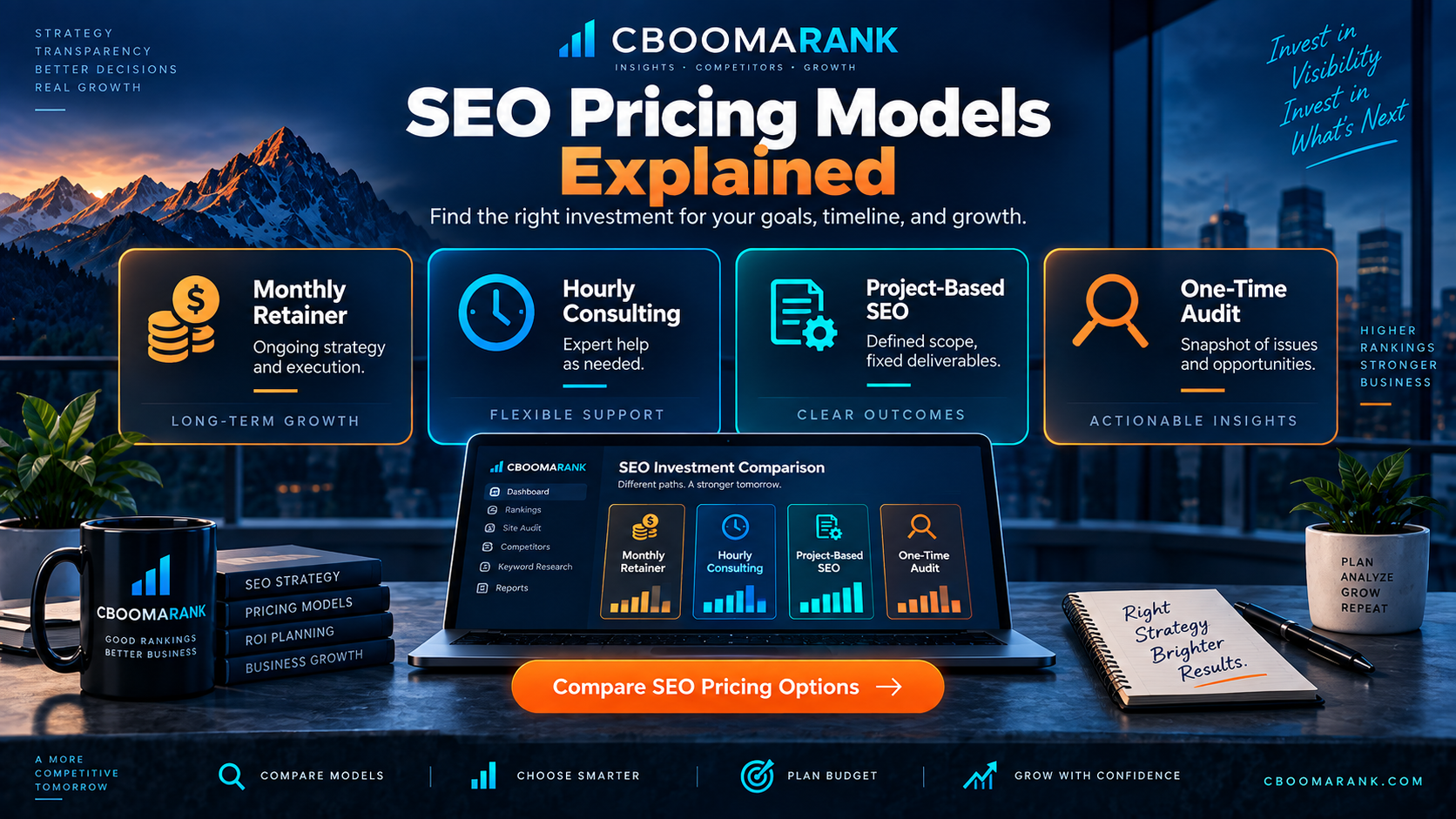
Most professional SEO engagements use one or a combination of several pricing structures. The best model depends on whether the work is ongoing, narrowly defined, advisory or tied to a particular business event such as a website migration.
How Much Does SEO Cost With a Monthly Retainer?
A monthly retainer is designed for ongoing work. It may include keyword research, technical monitoring, content optimization, reporting, competitor research, digital PR or link acquisition, depending on the agreement.
Retainers make sense when the strategy requires repeated execution and measurement. Rankings, crawling conditions, competitors and search demand change over time, so many businesses need continuous prioritization rather than a one-time checklist.
The key question is not simply the monthly number. Ask what the provider will actually do each month, how priorities are selected, which deliverables are guaranteed, which are conditional, and how results will be measured.
How Much Does SEO Cost Per Hour?
Hourly pricing is common when a business needs specialist advice rather than full execution. Examples include migration planning, technical troubleshooting, strategy reviews, training, analytics interpretation or an independent second opinion.
A high hourly rate is not automatically expensive if an experienced specialist resolves an important issue quickly. Conversely, a low hourly rate can become costly if the work takes substantially longer or requires repeated corrections.
For technically complex sites, consulting may focus on technical SEO issues such as crawling, indexing, canonicalization, site architecture, JavaScript rendering, structured data or performance.
How Much Does SEO Cost for a Project?
Project pricing works best when the scope can be defined clearly. Examples include an SEO audit, a content gap project, a site migration, a backlink profile review, an ecommerce category optimization project or a structured-data implementation.
A well-written project proposal should define the starting assumptions, deliverables, responsibilities, timeline, revision process and what happens if the original scope changes. This makes project fees easier to compare than a vague promise to “improve SEO.”
How Much Does SEO Cost for an Audit?
A one-time audit can be useful before committing to a larger retainer. It should do more than export issues from a crawler. A strong audit connects technical findings with search performance, content quality, internal linking, competitors and business priorities.
For example, a website may not need dozens of new articles if existing pages already target valuable demand but suffer from weak intent alignment or poor internal linking. Likewise, content production may have limited impact if important sections of the site are not being crawled or indexed correctly.
What Affects How Much SEO Costs?
SEO cost is driven primarily by the amount and difficulty of work needed to move a website from its current condition toward its goals. Two businesses in the same industry can therefore receive very different proposals.
Website size and technical complexity
A 30-page service website is typically easier to audit and maintain than an ecommerce platform containing tens of thousands of product, category and faceted-navigation URLs. Larger websites create more opportunities for crawl waste, duplicate content, internal-linking problems, indexation issues and template-level errors.
Technical complexity also matters. International sites, JavaScript-heavy applications, marketplaces and websites with multiple subdomains can require more specialist investigation and implementation support.
Competition and market difficulty
Ranking for a low-competition regional service can demand far less investment than competing nationally for finance, software, insurance or other commercially valuable queries. Strong competitors may already have years of content development, brand demand and high-quality backlinks.
In those environments, the cost is not simply “paying for rankings.” It reflects the resources needed to produce a competitive strategy, execute it consistently and measure whether the work is creating meaningful progress.
Keyword scope and search intent
Targeting five closely related service queries is a different project from building visibility across hundreds of commercial and informational topics. Good keyword research should determine which queries deserve investment and which can be served by the same page rather than multiplying content unnecessarily.
Search intent also affects cost. Transactional pages may require conversion-oriented copy, product or service information, trust signals and competitive research. Informational content may require subject-matter research, original examples, visual assets and strong internal linking.
Content requirements
Some websites already contain strong material that mainly needs consolidation and optimization. Others require entirely new topic clusters, product copy, service pages or editorial resources.
The cost of content should therefore be evaluated by what is included: research, writing, editing, expert review, visuals, publishing, optimization, updates and performance monitoring. Word count alone is a poor measure of value.
Authority and backlink requirements
Competitive markets can require significant authority-building work. That may include digital PR, original research, outreach, partnership development, resource creation and other legitimate ways to earn relevant links.
A backlink analysis can help determine whether a website genuinely has an authority gap or whether other issues should be addressed first. Paying for large quantities of low-quality links simply because a competitor has more referring domains is not a sound SEO strategy.
How Much Does SEO Cost by Provider Type?
The type of provider can influence price, but it should not be treated as a quality score. Agencies, consultants, freelancers and in-house teams each have advantages depending on the work required.
How Much Does SEO Cost With an Agency?
Agencies can provide access to multiple disciplines—technical SEO, content, strategy, analytics, outreach and project management—under one engagement. That broader team structure often means a higher total fee, but it can be valuable when a business needs several capabilities at the same time.
Businesses comparing agencies should examine who will actually work on the account, how much senior oversight is included, which deliverables are produced internally, how reporting works and whether implementation is included or merely recommended.
How Much Does SEO Cost With a Freelancer?
Freelancers can be efficient for clearly defined work or businesses that do not require a full multidisciplinary team. Experienced freelancers may specialize in technical SEO, local SEO, content strategy, ecommerce, migrations or other areas.
The important distinction is expertise and capacity, not the freelancer label itself. A highly experienced specialist may charge more than a junior agency account team while delivering more focused expertise.
How Much Does SEO Cost In-House?
Building SEO capability internally changes the cost structure. Instead of paying only a service fee, the company takes on salary, benefits, software, training, recruitment and management costs. An internal SEO professional may also depend on developers, writers, designers and digital PR resources elsewhere in the organization.
In-house SEO can make sense when search is strategically important enough to justify dedicated expertise and the organization has enough ongoing work to keep that capability productive.
Plan Your SEO Investment With Better Data
Analyze your website before choosing an SEO budget
Use CBOOMARANK to identify technical, content, keyword and authority opportunities so your SEO budget can focus on the work that matters most.
What Should Be Included in an SEO Package?
An SEO proposal should explain what the provider will actually do, not simply promise “optimization.” The exact deliverables will vary, but a serious engagement should connect diagnosis, execution and measurement.
Typical work may include technical auditing, keyword and competitor research, on-page optimization, internal linking, content planning, analytics, reporting and authority development. Businesses should ask which activities are included in the quoted fee, which require separate approval and which depend on findings discovered after the engagement begins.
Google’s own guidance on hiring an SEO recommends asking providers how they expect to improve a site, how they measure success, what timeframe they expect and whether they can explain the changes they intend to make. Google also warns that nobody can guarantee a number-one ranking.
That makes transparency a core part of value. A provider should be able to explain why a recommendation matters, what resources it requires, how implementation will be handled and what evidence will be used to judge the result.
For pages that already rank but underperform, a focused content optimization workflow can sometimes create more value than publishing large volumes of new material. Likewise, proper on-page SEO can strengthen titles, headings, intent alignment, internal links and page usefulness before larger investments are considered.
How Much Does SEO Cost for Local Businesses?
Local SEO pricing depends heavily on the number of locations, the competitiveness of the service area, the condition of the website, Google Business Profile requirements, local landing pages, citations, reviews and the strength of competing businesses.
A single-location professional service business usually has a narrower scope than a multi-location organization managing dozens or hundreds of markets. For that reason, local SEO should not be priced only by counting keywords.
Clutch’s 2026 pricing guide lists local SEO agencies commonly around the $100–$149 hourly bracket on its marketplace, but that should be viewed as a provider-market benchmark rather than a required rate for every local campaign.
A strong local SEO strategy should connect location relevance, website quality, business information, reviews, local content and measurement instead of relying on directory submissions alone.
How Much Does SEO Cost at Different Budget Levels?
Businesses often ask what a particular monthly budget can buy. The answer depends on the provider and market, but budgets can still be discussed in terms of realistic scope.
WebFX currently publishes vendor-side benchmarks of roughly $1,000–$5,000 per month for retainers, $75–$200 per hour for consulting and $500–$5,000 for individual projects. Because WebFX sells SEO services itself, those figures should be understood as a provider-published benchmark, not an independent industry standard.
WebFX’s SEO pricing guide is most useful as another point of comparison alongside independent marketplace and survey data.
| Indicative budget level | Likely scope | Best fit | Main risk |
|---|---|---|---|
| Limited / focused | Audit, consulting or a narrow optimization project | Small sites with clearly defined problems | Expecting full-service SEO from a very small scope |
| Ongoing small-business investment | Technical monitoring, content optimization, keyword work and reporting | Businesses building steady organic visibility | Spreading a modest budget across too many priorities |
| Competitive growth program | Content, technical SEO, digital PR, authority building and deeper analysis | Competitive national or ecommerce markets | Paying for activity without clear prioritization |
| Enterprise investment | Large-scale technical, content, analytics and cross-team programs | Large sites, international brands and complex platforms | High spend without implementation ownership |
The most productive question is therefore not “What package can I buy?” but “Which problems and opportunities should this budget address first?” Good competitor research can help identify where rival sites have genuine advantages and where matching their spending would simply waste resources.
Cheap SEO vs Professional SEO: What Is the Difference?
Low price alone does not mean poor SEO, and a high price does not guarantee quality. The distinction is usually found in scope, expertise, transparency, research depth, implementation quality and accountability.
A low-cost provider may be perfectly suitable for a narrow, well-defined task. Problems arise when a very small fee is presented as a complete solution to a competitive SEO problem that clearly requires substantial technical, content or authority work.
Businesses should be cautious when inexpensive packages depend on automated reports, mass-produced content, bulk directory submissions or large quantities of questionable links while providing little explanation of strategy.
When low-cost SEO becomes expensive
Cheap SEO becomes expensive when it creates cleanup work. Poor migrations, manipulative links, duplicate content, uncontrolled AI publishing, incorrect redirects or destructive technical changes can create losses that cost far more to diagnose and repair than the original service fee.
The safer approach is to match the provider to the problem. A specialist who charges more for a short engagement can be less expensive overall if the work is accurate, focused and implemented correctly.
Red Flags in SEO Pricing and How to Compare Proposals
Price should never be evaluated without examining the claims surrounding it. Google specifically warns against providers who guarantee first-place rankings, claim a special relationship with Google or refuse to explain what they plan to do.
Questions to ask before hiring an SEO provider
Ask what work is included, who performs it, how priorities are selected, what access will be required, how progress is measured, how often reporting occurs and what the provider considers a realistic timeframe.
You should also understand ownership. Confirm whether your business retains ownership of content, analytics configurations, reports, accounts and other assets if the engagement ends.
How to compare deliverables rather than price alone
Two proposals with the same monthly price can represent entirely different services. One may include implementation, content, technical monitoring and senior strategy support; another may include only recommendations and reporting.
| Provider model | Potential advantage | Potential limitation | Useful when |
|---|---|---|---|
| Agency | Access to multiple SEO disciplines | Higher overhead or less specialist attention on some accounts | You need coordinated execution across several areas |
| Freelancer / consultant | Focused expertise and direct communication | Capacity may be limited | You need a specialist or clearly scoped engagement |
| In-house | Deep business knowledge and continuous access | Salary, tools and supporting resources increase total cost | SEO is strategically important enough for dedicated ownership |
SEO software can also improve efficiency, but tools do not replace judgment. A useful set of SEO tools can support auditing, keyword research, competitor analysis and reporting while the strategy still requires human prioritization and implementation.
How Long Does SEO Take and Is SEO Worth the Cost?
SEO is not instantaneous. Google explains in its SEO Starter Guide that some changes can be reflected relatively quickly while others may take several months. Google also recommends allowing time before judging whether changes have had a beneficial effect.
That is why providers should not sell SEO as a fixed countdown to a guaranteed ranking. Results depend on the starting point, crawl and indexing behavior, competition, website quality, implementation speed and the nature of the changes made.
How to measure SEO return on investment
Measurement should begin with a baseline. Depending on the business, useful metrics may include qualified organic traffic, leads, ecommerce revenue, assisted conversions, visibility, non-brand clicks and the performance of priority landing pages.
A rank tracking workflow can provide useful directional evidence, but rankings should not be the only measure. A page moving from position 40 to position 12 may show major progress without yet producing meaningful traffic, while a small ranking improvement on a high-value commercial query can have a larger business impact.
SEO is worth the cost when the expected value of stronger search visibility justifies the required investment and the work contributes to assets the business continues to benefit from—better pages, stronger technical foundations, useful content, relevant authority and more effective site architecture.
What SEO Budget Should a Business Choose?

A useful budget begins with diagnosis rather than a generic package. Estimate the gap between the current site and the desired outcome, then identify which work is necessary, which is optional and which should be postponed.
Businesses with limited resources should concentrate spending instead of attempting every SEO tactic at once. Fixing severe technical problems, improving commercially important pages and strengthening internal linking can be more productive than spreading a small budget across dozens of low-priority activities.
Larger budgets should not automatically produce larger task lists. They should make it possible to execute the highest-impact opportunities faster, improve quality, expand useful coverage and solve more complex problems.
The budget should also reflect implementation capacity. There is little value in paying for large numbers of recommendations if the company cannot publish content, deploy technical changes or approve required updates.
Frequently Asked Questions About SEO Cost
1. How much does SEO cost per month?
There is no universal monthly price. Clutch’s current 2026 marketplace data places agency retainers broadly around $2,000–$20,000 per month, while other provider-published benchmarks can be lower. Scope, competition, provider type, website size and required services all influence the final cost.
2. How much should a small business spend on SEO?
A small business should base its budget on the opportunity and required work rather than an arbitrary industry percentage. A technically healthy local business may need a narrower engagement than a company competing across many services and locations.
3. Why is SEO so expensive?
SEO can involve several disciplines at once: technical analysis, development, research, content, analytics, internal linking, outreach, digital PR and ongoing measurement. Costs rise when the market, website and implementation requirements become more complex.
4. Is cheap SEO worth it?
It can be worthwhile when the scope is narrow and transparent. It becomes risky when a very low fee promises comprehensive results, guaranteed rankings or large volumes of low-quality activity that cannot be explained or measured.
5. How much does local SEO cost?
Local SEO cost varies by the number of locations, market competition, website condition, review strategy, local content and Google Business Profile requirements. There is no single appropriate rate for every local company.
6. How long does SEO take to work?
There is no fixed timetable. Google says some changes may be reflected quickly while others can take several months. Competitive progress often requires continued implementation and measurement rather than a one-time change.
7. Is SEO worth paying for in 2026?
SEO can be valuable when potential customers use search to discover the products, services or information a business provides. The investment should be judged against qualified traffic, leads, revenue and other business outcomes—not rankings in isolation.
TURN SEO DATA INTO BETTER BUDGET DECISIONS
Prioritize the SEO opportunities that deserve investment first
Use CBOOMARANK to connect website analysis, keyword research, competitor signals and SEO opportunities before deciding where to invest.
Final Verdict: How Much Should You Spend on SEO?
The right SEO budget is the amount required to address the opportunities that matter to the business at a quality level capable of competing in its market. That amount can be relatively modest for a focused project or substantially larger for a complex, competitive program.
Use published pricing data as context, not as a substitute for diagnosis. Clutch, provider benchmarks and historical surveys demonstrate that the SEO market spans a wide range of prices because engagements themselves vary widely.
Before signing a contract, understand the current state of the website, define the business outcome, compare the proposed scope, examine how implementation will happen and establish how success will be measured.
Good SEO pricing is therefore not about finding the cheapest package or automatically selecting the most expensive provider. It is about purchasing the right expertise and execution for the problems that actually stand between the website and stronger organic performance.
