

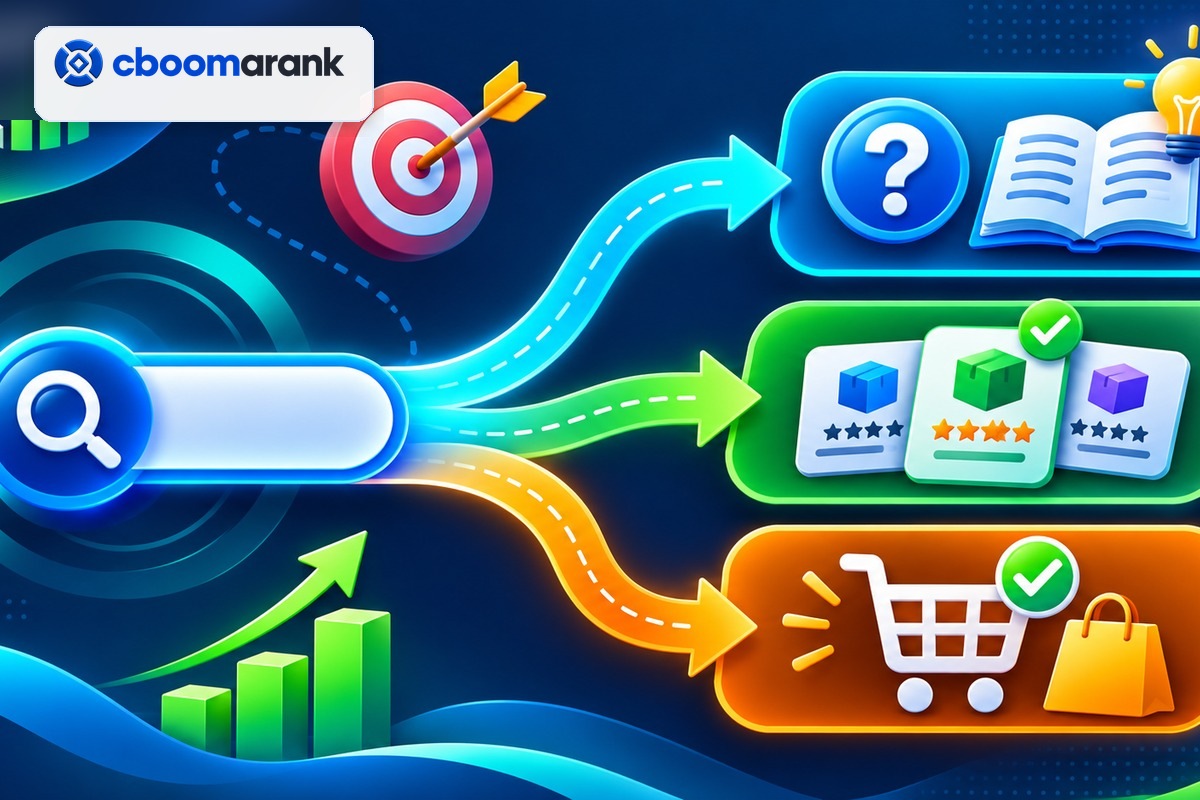
Search intent describes the outcome a person expects from a query. Understanding that outcome matters because a technically optimized page can still fail when it delivers the wrong kind of experience. A tutorial cannot always replace a product page; a product page cannot always replace an unbiased comparison; and a definition page is rarely the best answer to a query that clearly asks to buy.
The familiar categories—informational, navigational, commercial investigation and transactional—are useful, but real search results often mix them. Treat intent as an evidence-based page-planning tool rather than a label you assign once and forget.
Search Intent: The Quick Answer
Read the query, inspect the live results, identify the dominant page types and ask what successful searchers are trying to accomplish. Then match the page format, depth, evidence and call to action to that outcome. When results are mixed, decide which intent your page can serve best and connect it to the other stages of the journey with internal links.
| Intent | Typical need | Common page types | Useful next step |
|---|---|---|---|
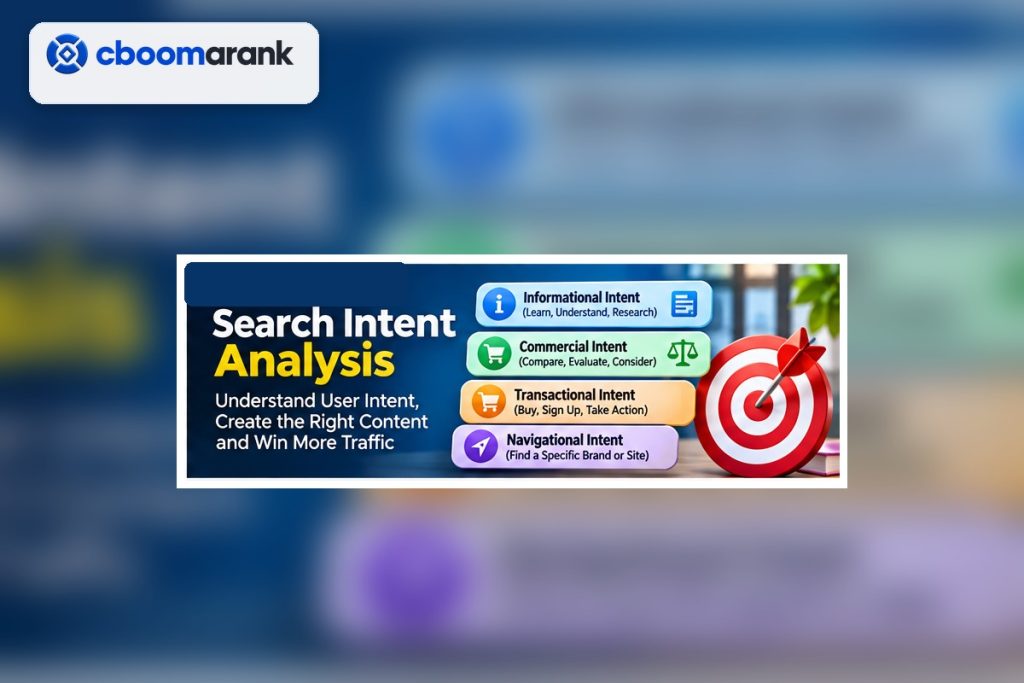
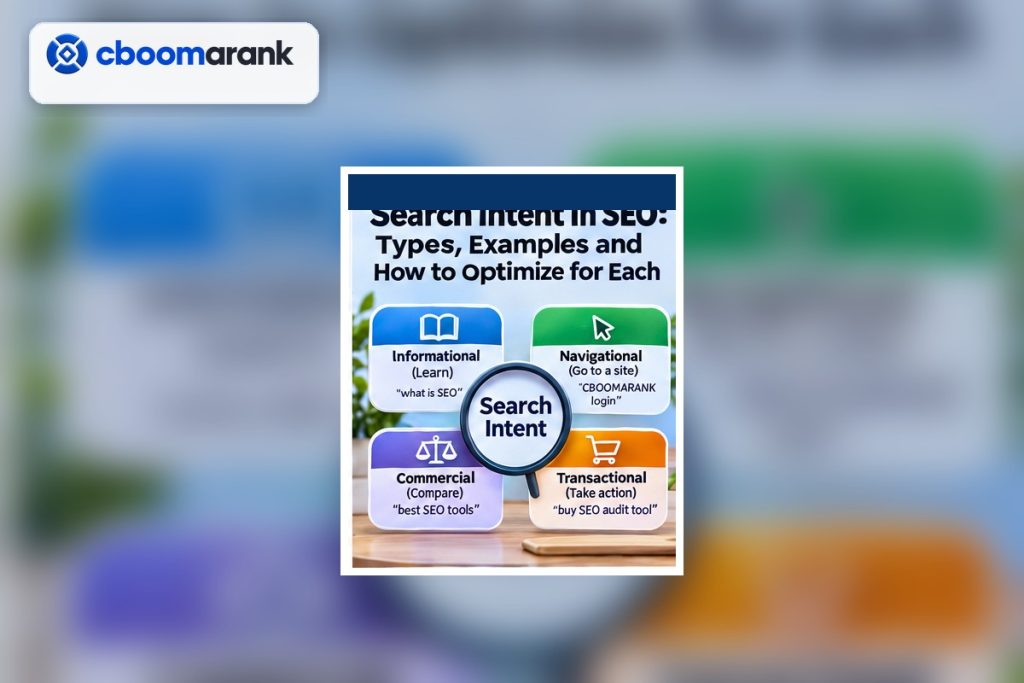
| Informational | Learn, solve or understand | Guides, tutorials, definitions, checklists | Related guide, tool, newsletter or product education |
| Commercial investigation | Compare options before deciding | Reviews, comparisons, alternatives, best-of lists | Product detail, trial, pricing or shortlist |
| Transactional | Take an action now | Product, signup, booking, category, tool page | Checkout, signup, enquiry, download |
| Navigational | Reach a known brand or page | Homepage, login, support, specific product | Direct navigation |
Informational Search Intent
Informational queries ask for knowledge or help. They range from broad questions such as “what are backlinks” to urgent tasks such as “how to remove a noindex tag.” The best response is usually clear, complete and action-oriented. Depth should match the task: a simple definition does not need 4,000 words, while a technical troubleshooting workflow may.
Good informational pages often earn visibility across many related long-tail queries because they answer subquestions naturally. Use examples, screenshots, tables and step-by-step instructions when they reduce uncertainty. Avoid hiding the answer behind a long introduction.
Commercial Investigation Search Intent
Commercial searchers are evaluating options. Queries containing “best,” “vs,” “alternatives,” “reviews,” “pricing,” “for agencies” or “for small business” often sit here. The page should help the reader decide, not merely describe the category.
A credible commercial page states its methodology, compares the criteria that matter and acknowledges trade-offs. For example, a best backlink checker comparison should distinguish link discovery, competitor gaps, monitoring and workflow integration rather than declaring one winner for every user.
Transactional Search Intent
Transactional queries imply readiness to act: buy, download, book, sign up, check, calculate or start. The ideal page minimizes friction. Clear pricing context, product capability, trust signals, form usability, speed and mobile experience can matter more than article length.
Do not force a blog post to rank for a transactional term if the SERP overwhelmingly favors tools or product pages. Instead, use informational content to support the commercial or transactional destination through relevant internal links.
Navigational Search Intent
Navigational queries name a destination: a brand, product, login area, documentation page or known resource. Your strategy is usually to make the intended page easy to discover and clearly titled. Trying to intercept another brand’s navigational query with weak comparison content rarely creates a useful user experience.
How to Infer Search Intent From the SERP
For quality control, Google Search Central’s people-first content guidance is a useful reference when deciding whether a page genuinely serves the outcome behind a query.
Search results reveal what the engine currently believes satisfies users. Record the top result types, titles, snippets and special features. If seven of ten results are product categories, the query is unlikely to be purely informational. If results include definitions, videos and tutorials, the searcher probably wants to learn.
Check the intended country and language. Intent can vary by market. Also note freshness: news boxes, dates and frequently updated pages indicate that recency may be part of the need.
Use the 3C framework
- Page type: guide, product, category, tool, video, forum, comparison.
- Preferred format: how-to, list, review, calculator, template, definition, case study.
- Search angle: beginner, free, fast, 2026, for agencies, for a specific country or platform.
Match Intent to the Buyer Journey
Intent and funnel stage overlap, but they are not identical. An informational query can come from a decision-ready buyer who needs one technical answer before purchasing. A commercial comparison can come from a researcher with no immediate budget. Use intent to design the page and use analytics or customer evidence to understand the journey.
Build pathways between stages. A long-tail tutorial can link to a cluster hub, then to a commercial comparison, then to a product workflow. This is more useful than turning every informational page into a sales pitch.
Search Intent in Keyword Research and Clustering
Classify intent before finalizing keyword clusters. Two phrases that share nouns may require different pages because one asks to learn and the other asks to buy. Conversely, two phrases with different wording can belong together when the SERP repeatedly ranks the same resources.
For keyword gap analysis, intent prevents you from copying a competitor’s visibility blindly. A competitor may rank for job listings, support queries or audiences your business does not serve. Filter those gaps before they become content briefs.
Use Intent to Improve Existing Pages
When a page ranks on page two or three, do not immediately add more keywords. Compare the page with the current results. Does your article format match? Is the introduction answering the same question? Are competitors offering a tool, template or comparison you do not? An intent mismatch can explain weak performance even when the page is technically optimized.
Also examine conversions. If the page attracts traffic but visitors rarely progress, the call to action may not match the stage. An informational article may need a softer next step; a transactional page may need fewer distractions.
CBOOMARANK Workflow for Intent-Led SEO
CBOOMARANK connects keyword opportunities, competitor research and broader website analysis. Use the research stage to identify likely intent and competing pages, then validate important terms with the live SERP. Map each cluster to the page that should own it and connect the content with relevant internal links.
Because search systems and results change, record the observation date and market for strategic queries. Revisit intent when rankings move unexpectedly or when new result types appear.
Research keywords and competitors, then turn intent into a clearer page and content plan.
Common Search Intent Mistakes
- Assigning intent from the keyword wording without checking results.
- Treating intent labels as permanent.
- Writing long-form content for a query that wants a tool or product.
- Mixing several incompatible intents on one page.
- Using a hard sales CTA on every informational article.
- Creating duplicate pages for minor variations of the same intent.
- Ignoring market and language differences.
Search Intent Checklist
- Define the query and target market.
- Identify the dominant result type, format and angle.
- Record whether the SERP is stable or mixed.
- State the user outcome in one sentence.
- Choose the page type that best delivers that outcome.
- Map related keywords with the same intent to the same page.
- Link to the next useful stage of the journey.
- Measure both search visibility and the intended user action.
- Re-check the SERP before major updates.
Query Modifiers That Often Signal Intent
Modifiers can provide clues before you open the SERP. “How,” “what,” “guide,” “template” and “examples” often lean informational. “Best,” “vs,” “review,” “alternatives” and “for [audience]” often indicate commercial investigation. “Buy,” “download,” “book,” “pricing” and “near me” frequently imply action. Brand names and product names often indicate navigation or evaluation.
These are clues, not rules. “Pricing” can lead to a vendor page, an independent comparison or a calculator. “Best” can produce ecommerce categories, listicles or forum discussions. Always confirm important decisions with the live results.
Diagnose an Intent Mismatch on an Existing Page
Suppose a tutorial ranks weakly for a query whose top results are mostly software category pages. Adding another 1,000 words to the tutorial may not help because the page type is wrong. Conversely, a thin product page may struggle for a query where searchers expect an in-depth guide. The mismatch is structural, not just textual.
Compare the title, page type, format and first-screen experience with the dominant results. If your page serves a different intent, either target a more appropriate query or create a separate page for the unmet intent. Do not force one URL to satisfy every stage of the journey.
How to Handle Mixed-Intent SERPs
Mixed results usually mean the query is broad or transitional. Rather than trying to copy every result type, decide which audience and outcome matter most to your business. Then make that purpose obvious while linking to the related stage. A foundational guide can link to a comparison; a comparison can link to a product; a product can link back to documentation or education.
Monitor the mix over time. If commercial pages gradually replace informational pages, the query may be shifting toward decision intent. If forums and videos appear, users may be looking for experience or demonstration that text alone does not provide.
Search Intent Across Markets
The same English phrase can behave differently in different countries because product availability, regulations, brand awareness and local language patterns change. Commercial intent around finance, insurance, hosting, ecommerce and local services is especially sensitive to geography.
For multilingual markets, avoid assigning intent by machine translation alone. Research the phrase actually used by local searchers and inspect local results. A literal translation may be grammatically correct but commercially unnatural.
Measure Intent Fit After Publication
When a page earns impressions but low click-through rate, the title or result presentation may not match expectations. By contrast, clicks followed by an immediate return to search can indicate that the page does not fully satisfy the task. Where engaged traffic produces few downstream actions, the call to action may be wrong for that stage.
Use these signals diagnostically rather than as simplistic ranking factors. The goal is to understand whether the visitor found the answer and whether the page creates a sensible next step.
Worked Example: “Backlink Checker” vs “Best Backlink Checker”
“Backlink checker” can imply a tool, a tutorial or both. A searcher may want to enter a domain immediately. “Best backlink checker” is much clearer commercial investigation: the user expects a comparison of platforms, criteria and trade-offs. Publishing the same article for both phrases would blur the experience.
A sensible architecture gives the generic query a practical how-to guide or tool pathway, while the “best” query gets a transparent comparison. The two pages should link to each other because the research journey overlaps, but each page should own a different outcome.
Intent Changes as Products and SERPs Evolve
A query can shift from informational to commercial as a software category matures. Search engines may also introduce AI answers, videos, forums, local packs or product features that alter the result mix. A page that matched intent two years ago can become less competitive without being factually wrong.
Include intent review in major content refreshes. Record what changed in the SERP before rewriting. This prevents teams from treating every ranking decline as a word-count or backlink problem.
Frequently Asked Questions
What are the four main types of search intent?
Informational, navigational, commercial investigation and transactional are the most common framework. Some teams use different labels, but the underlying task is identifying what the searcher wants to accomplish.
Can one keyword have multiple intents?
Yes. Mixed SERPs are common. Choose the intent your page can serve best and connect to other intents through related pages.
Does search intent affect SEO rankings?
Intent fit strongly affects whether a page is a plausible result for a query. It is not a standalone numeric ranking factor you can optimize in isolation; it is the practical alignment between query and page.
How often should intent be rechecked?
Recheck important queries during major content updates, when rankings change, and when the SERP introduces new formats or competitors.
Should every informational article link to a product?
Only when the product is a genuinely useful next step. Otherwise link to the resource that best helps the reader progress.
Final Checklist
Search intent turns keyword research into page design. Define the outcome, inspect the SERP, choose the right format and make the next step useful. When your title, introduction, structure, evidence and call to action all serve the same intent, the page becomes clearer for both readers and search systems.
