
Topic hub
Backlinks articles
Backlinks & Link Building Guides
Backlinks connect your website to the wider web. When relevant, trustworthy pages link to useful content, those links can help people discover your brand, send referral traffic, and give search engines additional context about how pages and websites relate to one another. But link building in 2026 is not about collecting the largest possible number of links. Sustainable SEO focuses on relevance, editorial value, useful content, natural anchor text, and links that make sense for real readers.
The CBOOMARANK Backlinks hub brings together practical guides on backlink fundamentals, link quality, guest posting, outreach, high-authority link earning, external-link best practices, and safe ways to grow a website’s visibility. Use this category to understand how backlinks work, learn which opportunities are worth pursuing, and avoid tactics that can create unnecessary SEO risk.
Whether you are building links for a new blog, a local business, an ecommerce website, a SaaS product, or an established brand, the goal is the same: earn credible mentions from relevant sources and create content that other publishers have a genuine reason to reference.
Start With These Backlink Guides
- What Are Backlinks and Why They Matter for SEO in 2026
- How to Build High-Quality Backlinks in 2026
- Guest Posting Guide: Earn Links the Right Way in 2026
- Best Guest Blogging Sites by Niche in 2026
- What Is an External Link? + SEO Best Practices
- How To Earn High-Authority Links That Drive Rankings
Browse the latest articles below for step-by-step backlink strategies, outreach ideas, link quality checks, and SEO guidance.
— END OF ABOVE-ARCHIVE COPY —
What Are Backlinks?
A backlink is a link from another website to a page on your website. You may also hear backlinks called inbound links or incoming links. If an industry publication links to one of your guides, that link is a backlink for your site. If your website links to another domain, that is an external or outbound link from your perspective.
Google’s current link guidance explains that links are used as signals when determining page relevance and to discover new pages for crawling. That makes links part of the web’s discovery and context system, but it does not mean every backlink improves rankings. The source, context, relationship, placement, and usefulness of the link all matter.
New to the topic? Read What Are Backlinks and Why They Matter for SEO in 2026 for a complete beginner-friendly explanation.
Why Backlink Quality Matters More Than Raw Quantity
A backlink profile can contain thousands of links and still be weak if most of those links are irrelevant, automated, manipulative, or placed on pages with no real audience. A smaller number of editorial links from genuinely relevant websites can provide more useful referral traffic, stronger brand exposure, and better contextual signals than a large package of low-quality links.
When evaluating a backlink opportunity, do not rely on a single third-party authority metric. Metrics such as Domain Authority, Domain Rating, Authority Score, or similar measures can be useful for screening and comparison, but they are vendor-created estimates rather than Google scores. Manual review remains important.
A Practical High-Quality Backlink Checklist
- Topical relevance: the linking website and page serve an audience related to your subject, market, product, or expertise.
- Editorial context: the link appears naturally inside useful content rather than in a hidden block, spammy footer, or automated directory.
- Audience value: a real reader could reasonably benefit from clicking the link.
- Natural anchor text: the clickable wording fits the sentence and is not forced to repeat the same exact-match keyword.
- Trust and transparency: the publisher has clear ownership, useful content, consistent editorial standards, and no obvious pattern of selling manipulative links.
- Traffic potential: the linking page has a plausible audience and the placement can create brand exposure or referral visits.
- Link relationship: paid, sponsored, affiliate, or user-generated links are qualified appropriately when required.
Safe Link Building Strategies for 2026
The strongest link-building programs start with something worth linking to. Outreach is far easier when the destination page contains original research, a genuinely useful tool, a strong tutorial, a comparison, a template, a data set, an infographic, a calculator, a checklist, or a resource that helps another publisher serve its audience.
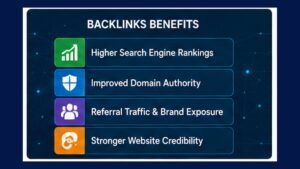
Create linkable assets: Publish original resources that journalists, bloggers, researchers, customers, and industry sites can cite. Strong examples include studies, benchmarks, free tools, templates, statistics, definitive guides, and visual explainers.
Guest posting with an audience-first mindset: Contribute useful articles to relevant publications. The article should stand on its own as valuable content; any link back to your site should be a natural reference, not the only reason the article exists.
Digital PR and expert contributions: Offer expert commentary, original data, practical examples, or newsworthy insights to journalists and publishers. A strong mention can create brand visibility even when the link itself is not the only objective.
Broken link building: Find outdated or broken resources on relevant websites and suggest a genuinely useful replacement. This works best when your page closely matches the original resource’s purpose.
Resource page outreach: Identify curated resource pages that already recommend useful tools, guides, templates, or references in your niche. Pitch only when your resource clearly improves the page.
Unlinked brand mentions: Find legitimate mentions of your company, product, research, or content that do not include a link. Politely ask whether a link would help readers find the referenced source.
Partnership and community links: Earn links naturally through associations, supplier relationships, integrations, podcasts, webinars, sponsorships, event participation, local organizations, and industry collaborations.
For a step-by-step workflow, read How to Build High-Quality Backlinks in 2026.
Guest Posting: Earn Links Without Turning Content Into Link Spam
Guest posting can still be useful when it is editorial, relevant, and helpful to the host publication’s readers. A good guest article demonstrates expertise, reaches a new audience, and may naturally reference a relevant resource. A weak guest-post campaign focuses on exact-match anchors, irrelevant sites, bulk placements, or websites created mainly to sell links.
Use our Guest Posting Guide: Earn Links the Right Way in 2026 for the complete process, then use the Best Guest Blogging Sites by Niche in 2026 as a research starting point. Always review each publication manually before pitching.
Backlink Tactics to Avoid
Google’s spam policies specifically address link spam and attempts to manipulate search rankings with links. The safest long-term strategy is to avoid campaigns whose main purpose is manufacturing ranking credit rather than helping users or earning legitimate editorial attention.
- Buying large bundles of dofollow links with guaranteed authority metrics or guaranteed rankings.
- Using private blog networks or websites created primarily to place SEO links.
- Publishing thin guest posts on unrelated websites simply because they accept submissions.
- Repeating the same exact-match commercial anchor text across many placements.
- Automated comment, forum, profile, directory, or widget links created at scale.
- Hiding links, disguising links, or placing links where users are unlikely to see them.
- Treating a high domain metric as proof that a site is trustworthy without checking the real content and audience.
Official reference: Google Search Central – Spam Policies for Google Web Search
Dofollow, Nofollow, Sponsored and UGC Links
A standard HTML link does not need a special ‘dofollow’ attribute. For certain relationships, however, publishers can use rel attributes to explain the nature of a link. Google currently recommends rel=”sponsored” for advertisements and paid placements, rel=”ugc” for user-generated content where appropriate, and rel=”nofollow” when a publisher does not want Google to associate the site with or crawl from that link in the normal way. Nofollow also remains acceptable for paid links, although sponsored is the preferred value for advertising and paid placements.
Read the official guidance: Qualify Your Outbound Links
Anchor Text and Crawlable Link Best Practices
Good anchor text helps people understand where a link goes. Use concise, descriptive wording that fits naturally in the surrounding sentence. Avoid stuffing keywords into anchors or repeating the same commercial phrase across many external placements.
For ordinary web links, use standard HTML anchor elements with an href destination so crawlers and users can reliably follow them. Google’s current link best-practices documentation explains that crawlable links and understandable anchor text help Google discover pages and interpret context.
Official reference: Google Search Central – Link Best Practices
Backlinks vs Internal Links vs External Links
| Link Type | Direction | Primary Use | Example |
| Backlink | Another website → your site | Referral traffic, discovery, context and authority signals | An industry blog links to your SEO guide. |
| Internal link | One CBOOMARANK page → another CBOOMARANK page | Navigation, crawl paths, topical relationships and distribution of internal authority | A backlink guide links to a guest-posting guide. |
| External link | Your site → another domain | Citations, evidence, useful references and source attribution | A CBOOMARANK article links to Google Search Central. |
Related reading: What Is an External Link? + SEO Best Practices
How to Audit a Backlink Profile
Backlink audits are useful for understanding where links come from, which pages attract the most mentions, whether anchor text looks natural, and which domains deserve closer review. Do not turn every unfamiliar link into an emergency. Large websites often accumulate scraper links, spammy references, or strange domains without actively creating them.
- Export link data from Google Search Console and, when useful, compare it with a third-party backlink index.
- Review referring domains, linked pages, anchors, link attributes, and the context surrounding important links.
- Separate legitimate editorial links from obvious spam, automated pages, irrelevant directories, and suspicious paid placements.
- Look for lost links and broken destinations that could be recovered with redirects or updated outreach.
- Identify pages already earning links and strengthen their internal linking to related CBOOMARANK content.
- Track new referring domains over time rather than focusing only on the total backlink count.
How to Build a Backlink Strategy Around Business Goals
A successful backlink campaign should support more than a vanity metric. Start by choosing the business result you want: more qualified referral visitors, stronger visibility for a commercial topic, more brand mentions, better distribution for original research, or deeper relationships with relevant publications. Then build linkable assets and outreach around that outcome.
For example, a web hosting comparison site might create original hosting-performance research and pitch technology publications. A local business might prioritize chambers of commerce, local news, suppliers, associations, event pages, and community resources. A SaaS company could earn links through integrations, partner directories, original benchmarks, templates, case studies, and expert commentary. Relevance changes by market, so the right backlink strategy is always connected to the audience you want to reach.
How CBOOMARANK Evaluates Backlink Opportunities
CBOOMARANK recommends evaluating links through a combination of relevance, editorial quality, audience value, transparency, traffic potential, placement, and natural context. Third-party SEO metrics can support research, but they should not replace judgment. A website with a lower metric and a highly engaged niche audience may be a better opportunity than an unrelated high-metric domain.
- Would the link make sense if search engines did not exist?
- Does the linking page genuinely help its readers?
- Is the destination page the best resource for the specific context?
- Would you still value the placement for referral traffic, reputation, or relationships?
- Is any paid or sponsored relationship disclosed and technically qualified?
- Does the outreach approach respect the publisher rather than treating the site as a link source?
For advanced link earning, continue with How To Earn High-Authority Links That Drive Rankings.
A Simple 30-Day Backlink Growth Plan
| Week | Focus |
| Week 1 | Audit existing backlinks, map important pages, study competitors, and choose 2–3 linkable assets to promote. |
| Week 2 | Build a tightly relevant prospect list: publications, resource pages, partners, associations, podcasts, journalists, and sites with broken or outdated references. |
| Week 3 | Send personalized outreach, contribute expert quotes, pitch guest topics, and promote useful data or tools. Avoid mass-email templates that offer nothing specific. |
| Week 4 | Track replies and publications, verify links and attributes, measure referral traffic, update internal links, and record what produced the best results. |
Frequently Asked Questions About Backlinks
What is a backlink in SEO?
A backlink is a link from another website to your website. Backlinks can help people discover your content, generate referral traffic, and give search engines context about relationships between pages and sites.
Are backlinks still important in 2026?
Links remain part of how search engines discover and understand the web, but quality matters more than chasing large quantities. Strong content, technical SEO, search intent, internal linking, user experience, and other signals also matter.
How many backlinks do I need to rank?
There is no universal number. The competitive landscape, topic, search intent, website authority, content quality, and strength of competing pages all affect how difficult a query is.
What is a high-quality backlink?
A strong backlink usually comes from a relevant, trustworthy page, appears in natural editorial context, uses sensible anchor text, and provides genuine value to readers.
Is guest posting safe for SEO?
Guest posting can be useful when the article is relevant and genuinely helpful. It becomes risky when it is used primarily to manufacture ranking credit through low-quality placements, paid dofollow links, or over-optimized anchors.
Should I buy backlinks?
Avoid buying links for the purpose of manipulating rankings. Paid advertising, sponsorships, and commercial placements can be legitimate, but links should be appropriately qualified according to the relationship.
Are nofollow backlinks worthless?
No. A nofollow link can still create referral traffic, brand visibility, citations, relationships, and discovery. Evaluate links by their real business and audience value, not only by whether they pass ranking signals.
What is the difference between backlinks and referring domains?
A backlink is an individual link. A referring domain is the unique website that sends one or more backlinks. Ten links from one domain equal ten backlinks but only one referring domain.
Can bad backlinks hurt SEO?
Manipulative link schemes can create risk. However, not every strange or low-quality link requires action. Focus first on links you intentionally created or control, and use Google’s spam policies as the reference for what constitutes link spam.
How do I start building backlinks?
Create something genuinely useful, identify publications and communities relevant to the audience you want, and earn attention through outreach, partnerships, digital PR, guest contributions, resource pages, broken-link replacement, and unlinked mention recovery.
Recommended Internal Links for This Category
- What Are Backlinks and Why They Matter for SEO in 2026
- How to Build High-Quality Backlinks in 2026
- Guest Posting Guide: Earn Links the Right Way in 2026
- Best Guest Blogging Sites by Niche in 2026
- What Is an External Link? + SEO Best Practices
- How To Earn High-Authority Links That Drive Rankings
- CBOOMARANK Blog
Authoritative External References
Latest from this topic
Explore the archive
Ideas, practical frameworks, and research from the CBOOMARANK knowledge hub.
Put insight into action
Turn Backlinks insight into practical next steps
Use CBOOMARANK to turn the research you are reading into a clearer SEO and website-growth plan.