


The llms.txt proposal has attracted attention because it offers a simple text file that can point language-model systems toward selected information on a website. That sounds attractive to teams trying to improve AI visibility, but it is easy to overstate what the file can do. Google’s current guidance is explicit: Google Search does not use llms.txt for ranking or visibility in its generative AI features.
Quick takeaway: Creating llms.txt is optional. It may be useful for services that choose to read it, but Google says it neither helps nor harms visibility in Google Search, AI Overviews or AI Mode.
What You Will Learn
- What changed in 2026 and why it matters
- How to apply the guidance without chasing unsupported shortcuts
- A practical implementation workflow
- How to measure results and avoid common mistakes
- A final checklist your team can reuse
What llms.txt Is Intended to Do
llms.txt is a convention intended to give AI-oriented systems a curated, machine-readable view of a website. A site owner can use a text file to point toward important documentation, product pages, policies or other resources. The idea is operational convenience: instead of forcing a system to infer the most useful pages from the entire site, the file offers a concise map.
That concept is different from robots.txt, XML sitemaps and canonical tags. robots.txt controls crawler access, XML sitemaps help discovery of URLs, and canonical tags communicate preferred URL versions. llms.txt is not a replacement for any of those established controls.
What Google Says About llms.txt
Google’s 2026 generative-AI optimization guidance directly addresses the question. Google Search does not use llms.txt or similar special AI text files to determine visibility in Search, including generative AI experiences. The company says creating one is fine for other services that may use it, but it does not positively or negatively affect Google Search rankings.
This clarification matters because it prevents teams from confusing crawlability with ranking advantage. A file may be discoverable or indexable as a normal file without receiving special treatment. The existence of the file should not be presented as a Google AI optimization requirement.
When llms.txt Can Still Be Useful
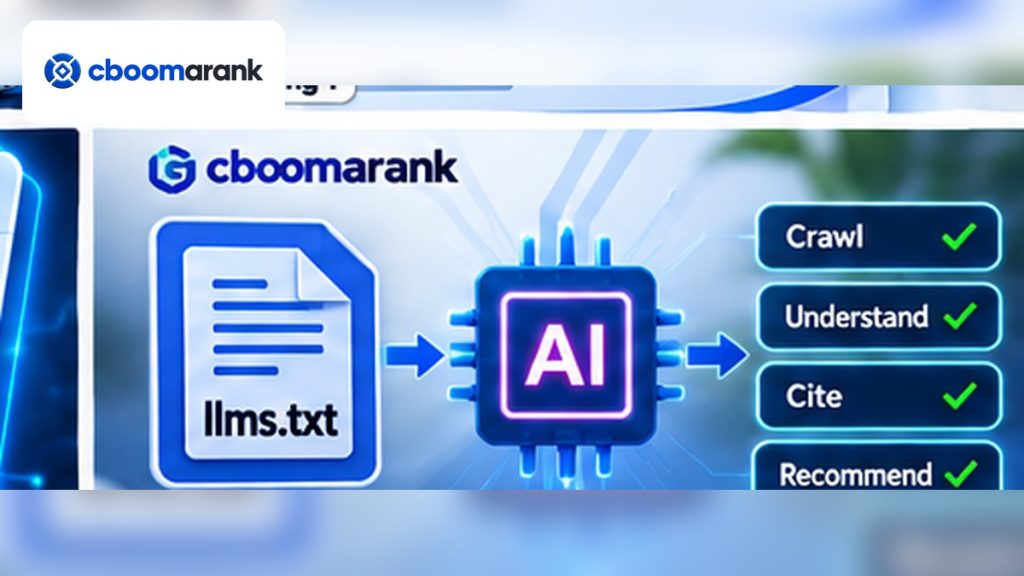
The file can still have practical value when a product, documentation portal or publisher wants to provide a clean list of authoritative resources to AI tools that support the convention. Documentation-heavy SaaS companies are the clearest use case because they often have versioned docs, API references, tutorials and product pages that benefit from a curated starting point.
The decision should be based on maintainability. A stale llms.txt file that points to retired pages or old documentation can create confusion for systems that rely on it. If your team cannot keep the file synchronized with major product and information-architecture changes, the maintenance cost may exceed the benefit.
How llms.txt Fits Into a Wider Search Strategy
llms.txt should not be treated as a stand-alone tactic. It works best when the site already has a clear information architecture, crawlable pages, reliable internal links, useful content and a measurement process. For SEO teams, developers, SaaS documentation owners and publishers, the practical question is not whether to chase every new Search feature, but how to connect the feature to the existing operating rhythm for publishing, technical SEO, analytics and conversion improvement.
A strong team records assumptions before making changes. That means documenting what visibility is expected to improve, which pages are affected, what supporting work is required and what evidence would count as success. This reduces the temptation to declare victory based on a single screenshot or temporary movement. It also makes it easier to reverse a low-value change and preserve the parts of the site that are already working.
Measurement: What to Track for llms.txt
Measurement should combine first-party evidence with business context. Track usage by supporting AI systems, maintenance accuracy and downstream referral behavior rather than Google rankings, but also watch page-level engagement, conversions, assisted conversions, branded demand and the quality of the landing pages receiving visibility. A metric can improve while business value stays flat, so reporting should always explain what changed and why the change matters.
Use weekly and monthly comparisons for strategic decisions, then annotate major releases, content updates, template changes and indexing events. When a metric moves, compare the timing with those events before assigning a cause. This is particularly important in AI and Search reporting because interfaces, models and result formats can change while the underlying page remains unchanged.
Examples and Decision Scenarios
A SaaS company with extensive developer documentation creates an llms.txt file that links only to the current API version, authentication guide, pricing documentation and key tutorials. The file is useful as a curated map for any compatible service, but the company still relies on normal crawlability, internal links and sitemaps for Google Search.
A content publisher creates llms.txt and then stops maintaining it. Six months later, several referenced URLs redirect or no longer represent the strongest resource. The file has become a maintenance liability, illustrating why optional AI files should be governed like any other production artifact.
An SEO team sees a vendor promise that llms.txt will improve AI Mode rankings. The team checks Google’s official documentation, finds that Google ignores the file for Search visibility and redirects effort toward content quality, technical accessibility and Search Console measurement.
llms.txt Versus the Controls That Actually Matter for Google
For Google Search, established controls still do the important work. robots.txt affects crawler access, noindex can prevent a page from appearing in Search, canonical tags help with duplicate URL signals, internal links help discovery and context, and sitemaps support URL discovery. Google also recommends important content be available in textual form and supported by high-quality images and video where appropriate.
If the site has crawl blocks, canonical conflicts, thin content or broken internal links, adding llms.txt does not solve those issues. Technical SEO fundamentals should be fixed first.
Operating Rhythm for the First 90 Days
During the first month, establish a baseline for llms.txt SEO and document the current configuration before changing anything. Capture the relevant Search Console views, the important URLs, current metadata, ownership and any automation already in place. The purpose is to create a reference point so later performance changes can be evaluated against a known state rather than memory.
During the second month, make a small number of prioritized changes rather than a site-wide rewrite. Choose pages with clear business value and enough data to evaluate. Record who owns each change, the exact deployment date and the expected outcome. This makes the work easier to review and reduces the risk of confusing several simultaneous interventions.
During the third month, evaluate performance using the same measurement window used at baseline. Keep improvements that have clear user or operational value, refine ambiguous changes, and reverse experiments that create complexity without benefit. Convert what worked into a repeatable checklist so the process becomes part of normal website operations.
Governance, Ownership and Documentation
SEO changes are more reliable when ownership is explicit. Decide whether the editor, SEO lead, developer, product marketer or community manager is responsible for the configuration and who approves production changes. Document the expected state in a shared operating note so future team members do not have to reverse-engineer why a setting exists.
Keep backups before changes that affect indexing, templates, metadata or public URLs. For high-impact technical work, use staging or a private preview when possible, validate the output, and deploy only the intended files or settings. A simple rollback plan is often more valuable than an elaborate optimization theory when a production issue appears.
For CBOOMARANK, every new article should also be reviewed for overlap with existing topics before publication. Avoid publishing near-duplicates simply because a new phrase is trending. A strong content library grows through complementary intent coverage, internal linking and periodic refreshes, not through many pages competing for the same query.
How to Review Quality Before Publishing
Run a factual review against the current first-party documentation cited in the article. Search features and platform behavior change frequently, so claims about availability, reporting dimensions, ranking effects or technical requirements should be verified before the publish button is pressed.
Then review the page from a reader’s perspective. Check whether the introduction answers why the topic matters, whether examples are concrete, whether headings help scanning, whether screenshots or illustrations explain the text, and whether the call to action fits the page intent. Remove paragraphs that only repeat earlier statements.
Finally, validate the production details: canonical URL, indexability, title, meta description, featured image, alt text, internal links, outbound references, categories and tags. The best article can still underperform if technical publishing errors prevent it from being discovered or make it difficult to use.
Practical Implementation Workflow
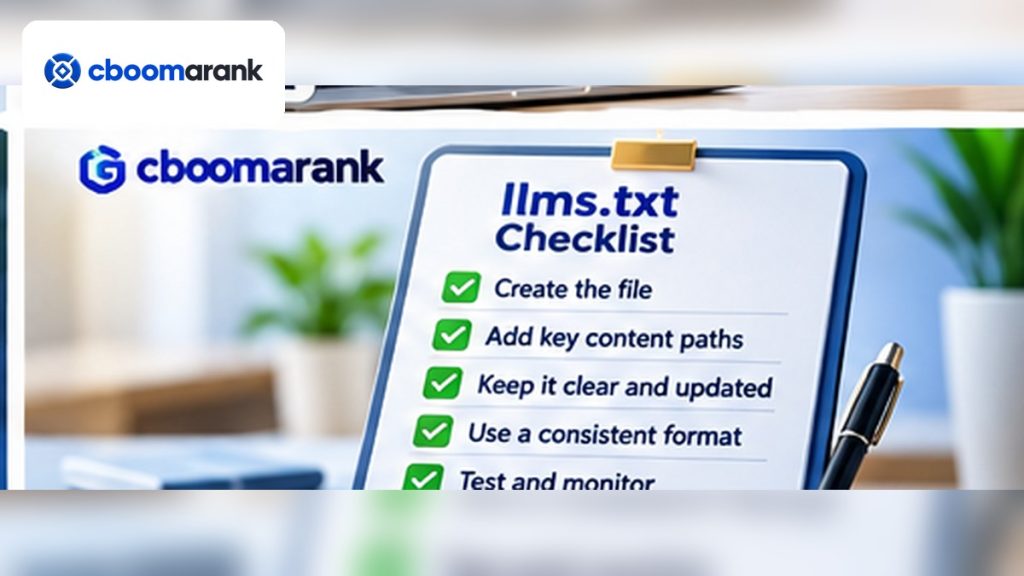
Step 1: Define the purpose
Write down which external systems you expect to consume the file and what problem it solves. If the only stated goal is higher Google rankings, the project does not have a valid basis under Google’s current guidance.
Step 2: Choose authoritative URLs
Prefer stable, canonical resources such as product documentation, policies, primary guides and current API references. Avoid filling the file with every URL on the site.
Step 3: Add ownership and review
Assign responsibility to the same team that maintains sitemaps, documentation or technical SEO. Review the file after product launches, URL migrations and documentation restructures.
Step 4: Keep Search fundamentals separate
Validate robots directives, noindex rules, canonical tags, internal links, XML sitemaps and page quality independently. Do not treat llms.txt as a substitute.
Step 5: Measure actual value
If a supporting system exposes referral or usage data, monitor whether the file improves discovery. Remove it if it becomes stale or has no operational value.
Common Mistakes to Avoid
- Calling llms.txt a Google ranking factor: Google explicitly says it does not use the file for Search visibility or rankings.
- Replacing the XML sitemap: The files serve different purposes; keep established discovery and indexing controls intact.
- Publishing a file nobody owns: Optional machine-readable assets require maintenance just like documentation and feeds.
- Adding confidential or non-public URLs: Only reference resources you are comfortable exposing publicly.
2026 Implementation Checklist
- Purpose and consuming systems documented.
- No claims that llms.txt improves Google rankings.
- Canonical public URLs selected.
- No confidential or private resources included.
- Ownership assigned for future maintenance.
- robots.txt, noindex, canonicals and XML sitemaps reviewed separately.
- File checked after major documentation or URL changes.
- Operational value reviewed periodically.
Related Guides and Resources
- Google AI Mode SEO 2026
- Technical SEO Checklist 2026
- AI Optimization for Websites
- SEO Guide 2026
- Google: Generative AI optimization guide
- Google: AI features and your website
Frequently Asked Questions
Does Google use llms.txt?
Google’s current guidance says Google Search does not use llms.txt or similar special AI text files for Search visibility.
Can llms.txt hurt SEO?
Google says maintaining the file for other systems neither helps nor harms your visibility or rankings in Google Search.
Should every website create one?
No. Create it only if you have a clear use case and can maintain it accurately.
Is llms.txt the same as robots.txt?
No. robots.txt is an established crawler-control mechanism. llms.txt is an optional convention for providing a curated resource map to supporting AI systems.
Final Recommendation
Treat llms.txt as an optional integration aid, not as a Search ranking tactic. If a compatible service benefits from a curated resource map and your team can keep it current, the file can be reasonable to maintain; otherwise, invest the time in crawlability, useful content, internal links and measurement.
Editorial Review Notes
Review Note 1: Preserve Evidence and Context
When evaluating this area, preserve the evidence that led to the decision. Keep the original metric, the changed state, the deployment date, the affected URLs and the person responsible for review. This makes future analysis more reliable because the team can distinguish a real site change from seasonality, reporting changes, crawler behavior or normal fluctuations. If the result is uncertain, keep the conclusion narrow and continue measuring rather than expanding the claim to the entire site.
Review Note 2: Preserve Evidence and Context
When evaluating this area, preserve the evidence that led to the decision. Keep the original metric, the changed state, the deployment date, the affected URLs and the person responsible for review. This makes future analysis more reliable because the team can distinguish a real site change from seasonality, reporting changes, crawler behavior or normal fluctuations. If the result is uncertain, keep the conclusion narrow and continue measuring rather than expanding the claim to the entire site.
Review Note 3: Preserve Evidence and Context
When evaluating this area, preserve the evidence that led to the decision. Keep the original metric, the changed state, the deployment date, the affected URLs and the person responsible for review. This makes future analysis more reliable because the team can distinguish a real site change from seasonality, reporting changes, crawler behavior or normal fluctuations. If the result is uncertain, keep the conclusion narrow and continue measuring rather than expanding the claim to the entire site.
Review Note 4: Preserve Evidence and Context
When evaluating this area, preserve the evidence that led to the decision. Keep the original metric, the changed state, the deployment date, the affected URLs and the person responsible for review. This makes future analysis more reliable because the team can distinguish a real site change from seasonality, reporting changes, crawler behavior or normal fluctuations. If the result is uncertain, keep the conclusion narrow and continue measuring rather than expanding the claim to the entire site.
